
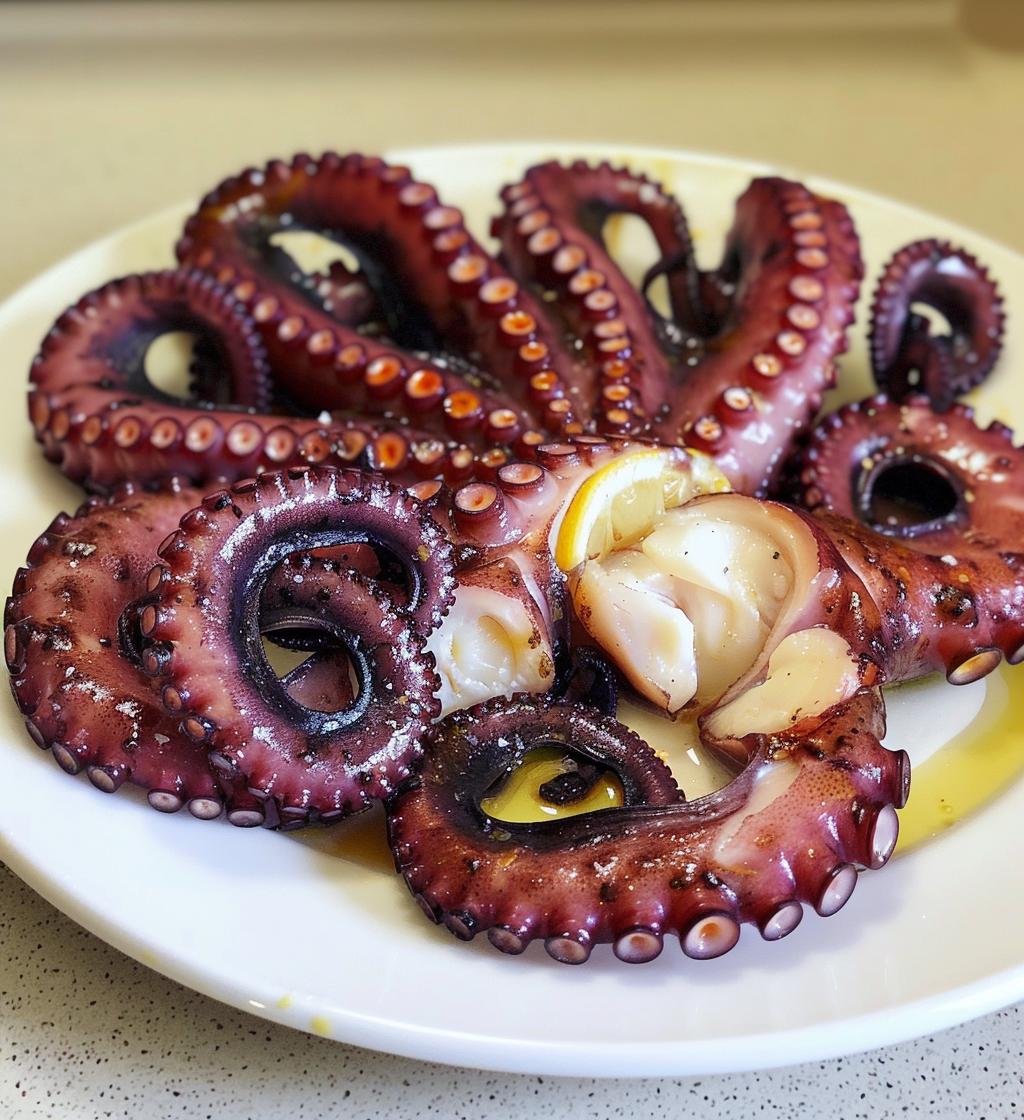
Let me tell you, boiled octopus is one of those dishes that sounds fancy but is surprisingly simple to whip up at home! There’s something incredibly special about this Mediterranean delight—it’s tender, flavorful, and really lets the natural taste of the octopus shine through. I mean, who doesn’t love a dish that looks impressive and tastes divine without spending hours in the kitchen? Trust me, once you get the hang of boiling octopus, you’ll find yourself craving it more often than you’d think!
Perfectly cooked, this boiled octopus can be served in so many ways, whether you’re enjoying it as a starter or pairing it with your favorite sides for a show-stopping main dish. The best part? It’s healthy and packed with protein, making it a guilt-free treat! So, let’s dive into the recipe and make some magic happen in your kitchen!
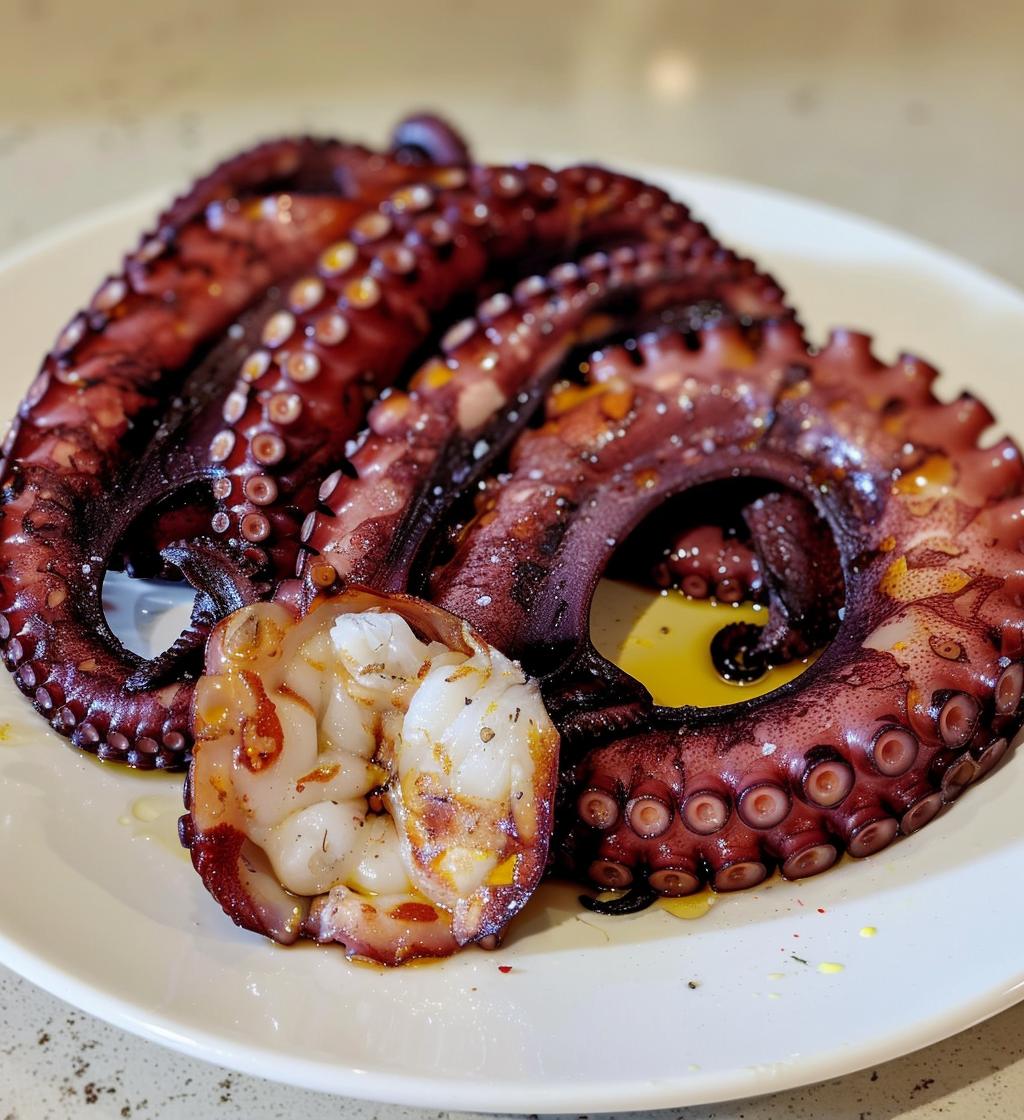
Ingredients List
Gathering the right ingredients is key to making the best boiled octopus! Here’s what you’ll need:
- 1 kg octopus – Fresh is best! Look for vibrant color and a clean sea smell.
- 2 bay leaves – These add a lovely depth of flavor. Just toss them in whole; they’ll work their magic as the octopus cooks.
- 1 lemon, halved – The juice will brighten everything up! Plus, you can use the other half to squeeze over your dish when it’s ready.
- Salt to taste – This is essential for enhancing the flavors. I usually go a bit heavier since the salt helps draw out the natural sweetness of the octopus.
How to Prepare Boiled Octopus
Alright, let’s get into the nitty-gritty of preparing your boiled octopus! It’s all about keeping it simple and straightforward, so you won’t feel overwhelmed. Follow these steps, and you’ll have perfectly tender octopus ready to impress!
Step-by-Step Instructions
- Start by filling a large pot with enough water to fully submerge the octopus. Add the bay leaves, halved lemon, and a generous amount of salt. Give it a good stir to mix everything together.
- Place the pot on the stove and bring the water to a rolling boil. This is where the magic begins! The aroma of the lemon and bay leaves will start to fill your kitchen—just wait!
- Once the water is boiling, gently add the octopus. Be careful, as the water might splatter a bit. Don’t worry; that’s just part of the fun!
- Reduce the heat to a gentle simmer. This is crucial because we want to cook the octopus slowly to ensure it becomes tender. Let it simmer for about 30-40 minutes. You might want to check on it halfway through to make sure it’s cooking evenly.
- After about 30 minutes, it’s time to check for tenderness. You can poke it with a fork or knife—the octopus should be soft and give easily. If it’s not quite there yet, give it a few more minutes. Every octopus is a little different!
- Once it’s perfectly tender, carefully remove the octopus from the pot and let it cool for a few minutes. You can place it on a cutting board or a plate.
- Finally, slice the octopus into bite-sized pieces and drizzle it with some good quality olive oil and a squeeze of fresh lemon juice. You’re ready to serve and enjoy this beautiful dish!
Why You’ll Love This Recipe
- Quick preparation: With just a little bit of time and simple steps, you can have a delicious dish on the table in under an hour.
- Delicious flavor: The natural sweetness of the octopus shines through, enhanced by the aromatic bay leaves and zesty lemon.
- Healthy profile: Packed with protein and low in fat, this dish is a guilt-free indulgence that fits perfectly into a balanced diet.
- Impressive presentation: Beautifully sliced and drizzled with olive oil, boiled octopus looks elegant enough for any special occasion.
- Versatile serving options: Enjoy it on its own, toss it into a salad, or pair it with your favorite sides for a complete meal.
- Kid-friendly: The mild flavor and tender texture make it appealing for all ages—perfect for introducing seafood to little ones!
Tips for Success
Now, let’s talk about some pro tips to ensure your boiled octopus turns out perfectly every single time! It’s all about those little details that make a big difference. Here’s what I’ve learned from my own adventures in the kitchen:
- Choose fresh octopus: The fresher, the better! Look for one with a vibrant color and a slightly firm texture. Avoid any that smell too fishy—fresh should smell like the ocean!
- Don’t rush the boiling: Make sure the water is at a rolling boil before adding the octopus. This helps to seal in the juices and keep the meat tender.
- Simmer gently: Once the octopus is in the pot, lower the heat to a gentle simmer. A hard boil can make the octopus tough, so take your time for that melt-in-your-mouth experience.
- Check for doneness: Every octopus is a little different in size and thickness, so keep an eye on it! Poke it with a fork—it should be tender but not mushy. If it’s not quite ready, give it a few more minutes and check again.
- Rest before slicing: Let the octopus cool a bit before you slice it. This allows the juices to redistribute, making every bite juicy and flavorful.
- Experiment with flavors: Don’t hesitate to add your own touch! Try adding garlic cloves, peppercorns, or even a splash of white wine to the boiling water for an extra layer of flavor.
With these tips in your back pocket, you’ll be well on your way to mastering the art of boiling octopus. Happy cooking!
Variations of Boiled Octopus
The beauty of boiled octopus is that it can be tailored to fit your taste preferences and the occasion! Here are some fun and delicious variations to consider:
- Spicy Kick: Add a few slices of fresh chili or a spoonful of red pepper flakes to the boiling water for a flavorful heat. It’ll give your octopus a nice zing that pairs wonderfully with the lemon.
- Herb Infusion: Toss in some fresh herbs like parsley, dill, or thyme along with the bay leaves. This will impart a delightful herbal aroma that complements the octopus beautifully.
- Asian Twist: For a different flair, try adding soy sauce, ginger, and garlic to the boiling water. After cooking, drizzle with sesame oil and sprinkle with sesame seeds for an Asian-inspired dish.
- Citrus Medley: Experiment with different citrus fruits! Instead of just lemon, add orange or lime halves to the pot. The result is a wonderfully aromatic and tangy flavor profile.
- Smoky Flavor: If you love a bit of smokiness, consider adding smoked paprika to the boiling water. This will give the octopus a rich depth of flavor that’s simply irresistible.
- Charred Finish: After boiling, give the octopus a quick sear on a hot grill or in a cast-iron skillet. This adds a lovely char that enhances the taste and gives it a beautiful presentation.
These variations not only jazz up the classic boiled octopus but also allow you to play around with flavors that you love. Don’t be afraid to get creative! Each twist brings its own unique charm to this already delightful dish, making it perfect for any gathering or just a cozy dinner at home.
Nutritional Information
Let’s break down the nutritional goodness of this delightful boiled octopus! It’s not just delicious; it’s also a powerhouse of nutrition. Here’s what you can expect per serving (about 250 grams):
- Calories: 210
- Fat: 2 g
- Saturated Fat: 0 g
- Unsaturated Fat: 1 g
- Trans Fat: 0 g
- Carbohydrates: 0 g
- Fiber: 0 g
- Sugar: 0 g
- Protein: 40 g
- Cholesterol: 150 mg
- Sodium: 100 mg
This meal is not only low in fat but also packed with a whopping amount of protein, making it a fantastic option for anyone looking to eat healthy without sacrificing flavor. Plus, with virtually no carbs or sugar, it fits beautifully into a low-carb lifestyle! So, enjoy your boiled octopus guilt-free and relish every tender bite!
FAQ Section
Got questions about boiled octopus? Don’t worry, I’ve got you covered! Here are some common queries I hear, along with my trusty answers to help you along the way:
Can I use frozen octopus instead of fresh?
Absolutely! Frozen octopus can be just as delicious, and it’s often more accessible. Just make sure to thaw it completely before cooking. The texture can be a bit different, but it still turns out tender and tasty!
How do I know when the octopus is done cooking?
Great question! You’ll want to check for tenderness after about 30 minutes of simmering. Poke it with a fork—if it goes in easily and the octopus feels soft, it’s ready! If it’s still a bit firm, give it a few more minutes and check again. Patience is key!
What should I serve with boiled octopus?
The options are endless! You can serve it with a simple side salad, roasted vegetables, or even on a bed of creamy polenta. Drizzling it with olive oil and a squeeze of lemon really enhances the flavors, so don’t skip that part!
Can I make this recipe ahead of time?
Yes, you can! Boiled octopus actually holds up quite well in the fridge. Just cook it, let it cool, and store it in an airtight container. It’ll last for about 2-3 days. You can enjoy it cold or reheat it gently when you’re ready to serve.
Is boiled octopus a healthy choice?
Definitely! Boiled octopus is low in fat and high in protein, making it a fantastic option for a healthy meal. Plus, it’s low in calories and carbs, so it fits perfectly into a balanced diet. Enjoy without guilt!
Storage & Reheating Instructions
Alright, let’s talk about how to keep that delicious boiled octopus fresh for later! Storing leftovers properly is key to enjoying every last bite without losing any of that lovely flavor and texture.
First off, make sure your boiled octopus has cooled completely before storing it. This helps prevent condensation from building up and making it soggy. Once it’s cooled, slice it into portions if you like, then place it in an airtight container. You can keep it in the fridge for up to 2-3 days.
If you want to keep it for longer, you can freeze it! Just wrap each piece tightly in plastic wrap, then place them in a freezer-safe bag or container. It’ll last in the freezer for about 2 months. When you’re ready to enjoy it again, just transfer it to the fridge to thaw overnight.
Now, when it comes to reheating, I recommend doing it gently to preserve that tender texture. You can either:
- Microwave: Place the octopus in a microwave-safe dish, cover it with a damp paper towel, and heat in short bursts of 30 seconds until warmed through. Be careful not to overdo it, or it might toughen up!
- Stovetop: Heat a bit of olive oil in a skillet over medium heat, then add the octopus. Sauté for a few minutes until warmed through, turning occasionally to avoid burning.
And there you have it! With these storage and reheating tips, you can enjoy your boiled octopus even after the initial feast. So, don’t hesitate to make extra—you’ll definitely want to savor those leftovers!
Print
Boiled Octopus: 5 Steps to Tender Mediterranean Bliss
- Prep Time: 10 minutes
- Cook Time: 40 minutes
- Total Time: 50 minutes
- Yield: 4 servings 1x
- Category: Seafood
- Method: Boiling
- Cuisine: Mediterranean
- Diet: Low Fat
Description
A simple and delicious recipe for boiled octopus.
Ingredients
- 1 kg octopus
- 2 bay leaves
- 1 lemon, halved
- Salt to taste
Instructions
- Fill a large pot with water and add bay leaves, lemon, and salt.
- Bring the water to a boil.
- Add the octopus to the boiling water.
- Reduce heat and simmer for 30-40 minutes.
- Check for tenderness; it should be soft.
- Remove the octopus and let it cool.
- Slice and serve with olive oil and lemon juice.
Notes
- Use fresh octopus for best results.
- Cooking time may vary based on the size of the octopus.
- Serve with your choice of sides.
Nutrition
- Serving Size: 250 grams
- Calories: 210
- Sugar: 0 g
- Sodium: 100 mg
- Fat: 2 g
- Saturated Fat: 0 g
- Unsaturated Fat: 1 g
- Trans Fat: 0 g
- Carbohydrates: 0 g
- Fiber: 0 g
- Protein: 40 g
- Cholesterol: 150 mg
Keywords: Boiled Octopus, Seafood, Mediterranean